
Last updated November 15, 2026
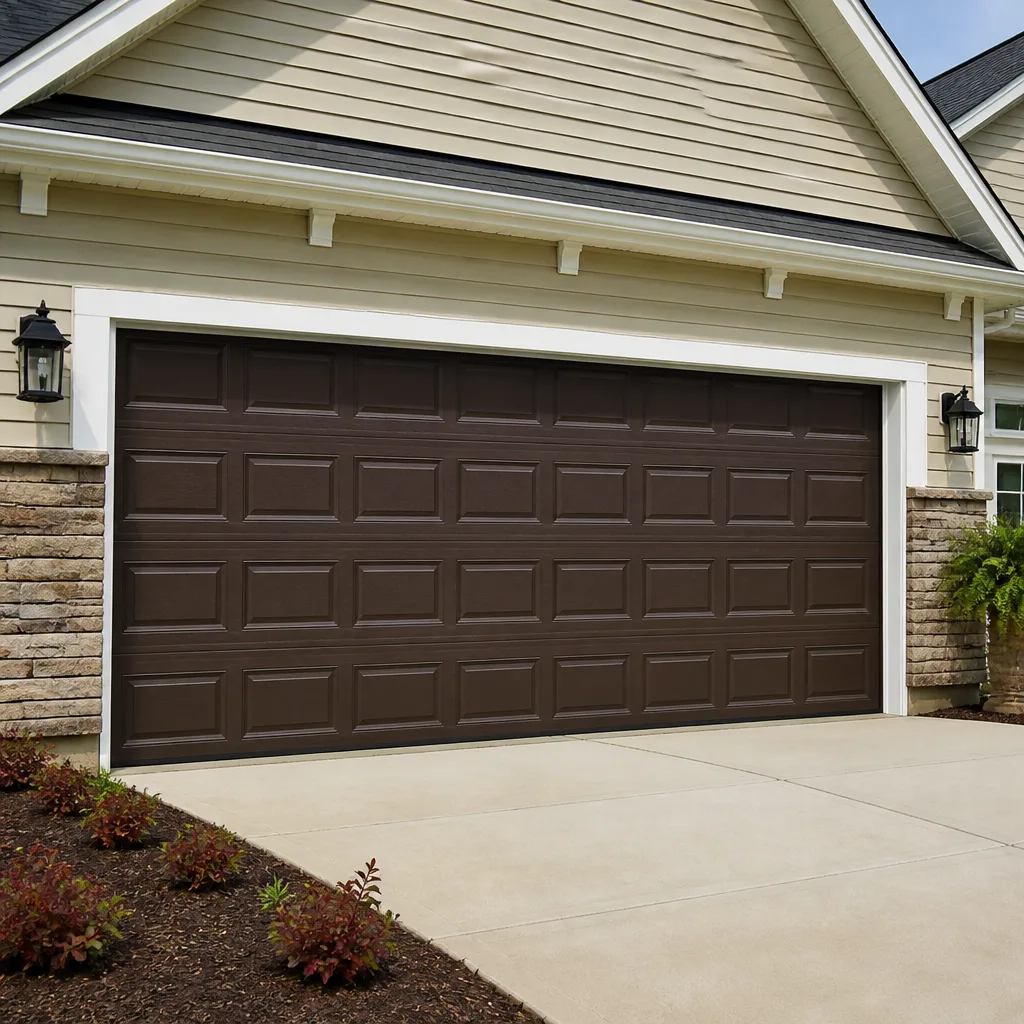 Raised-panel steel
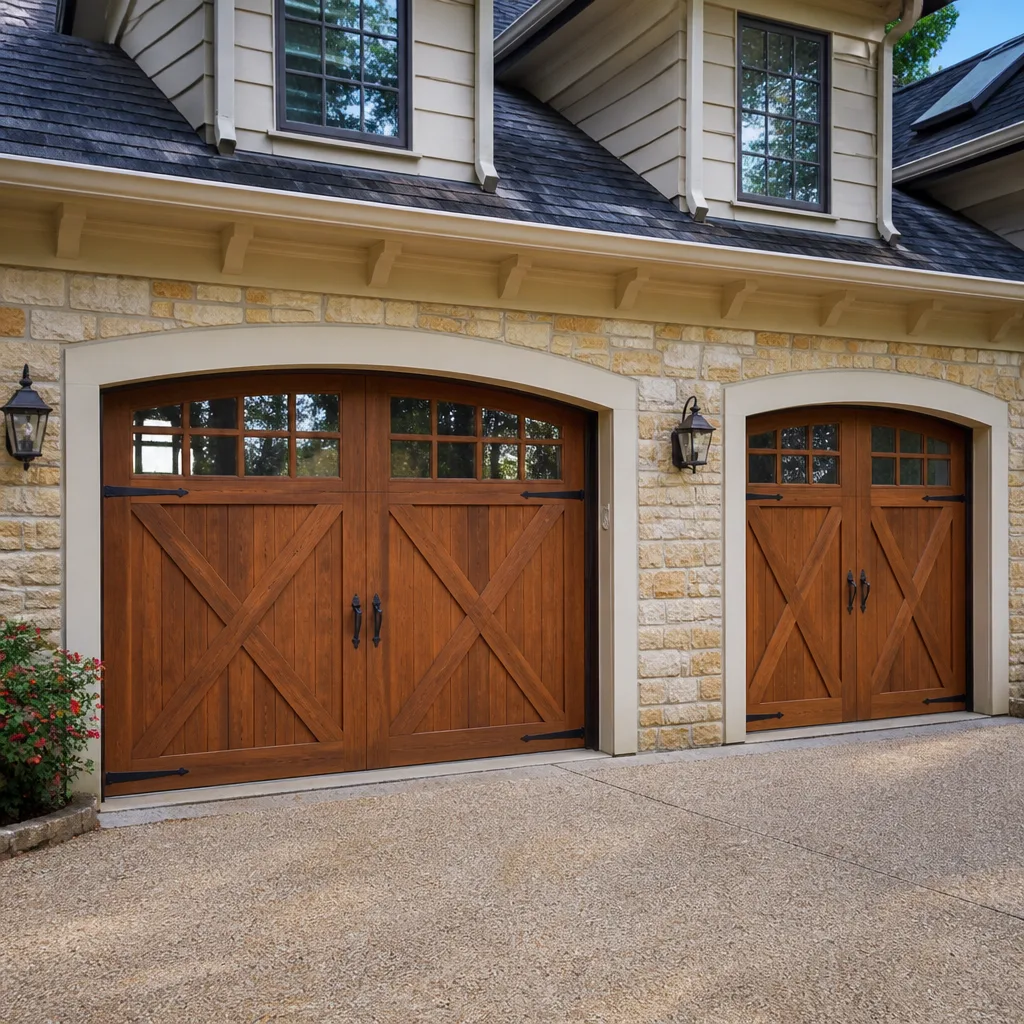 Carriage house
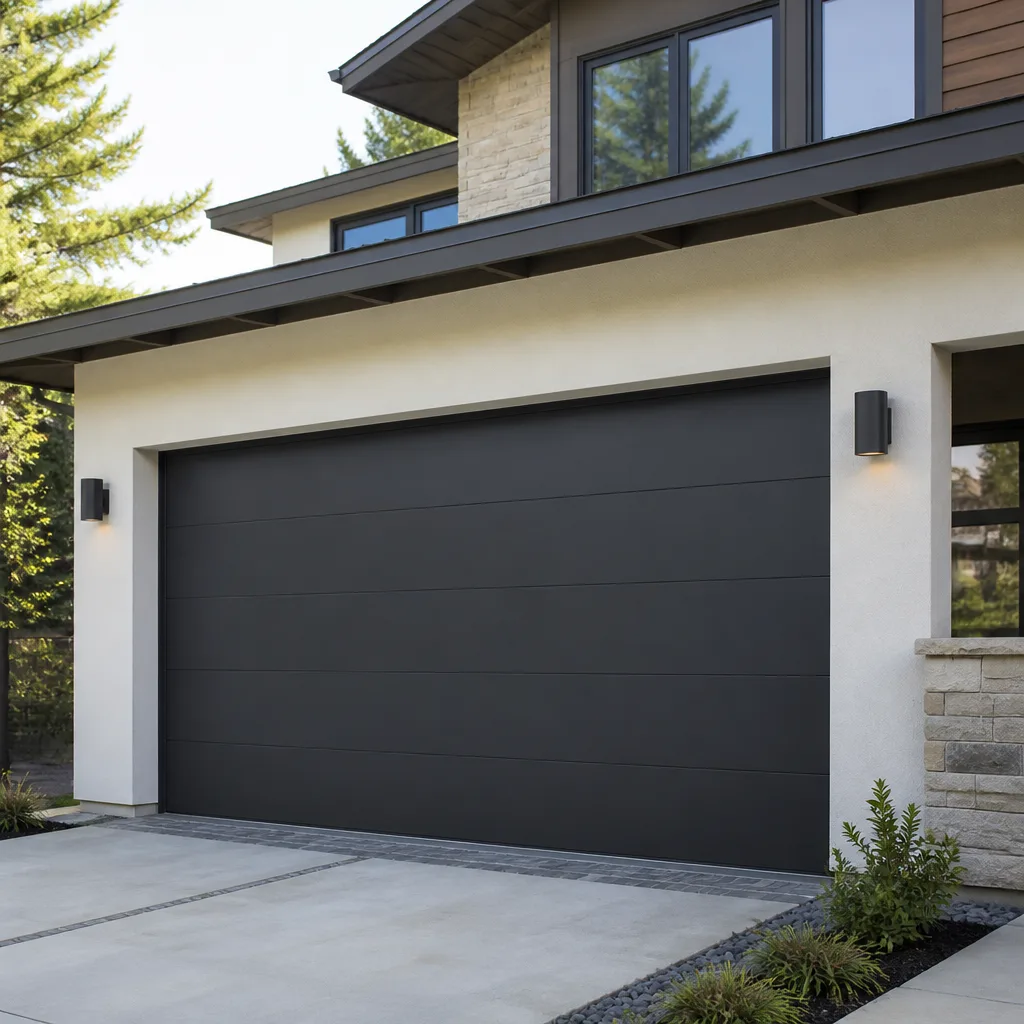 Modern flush
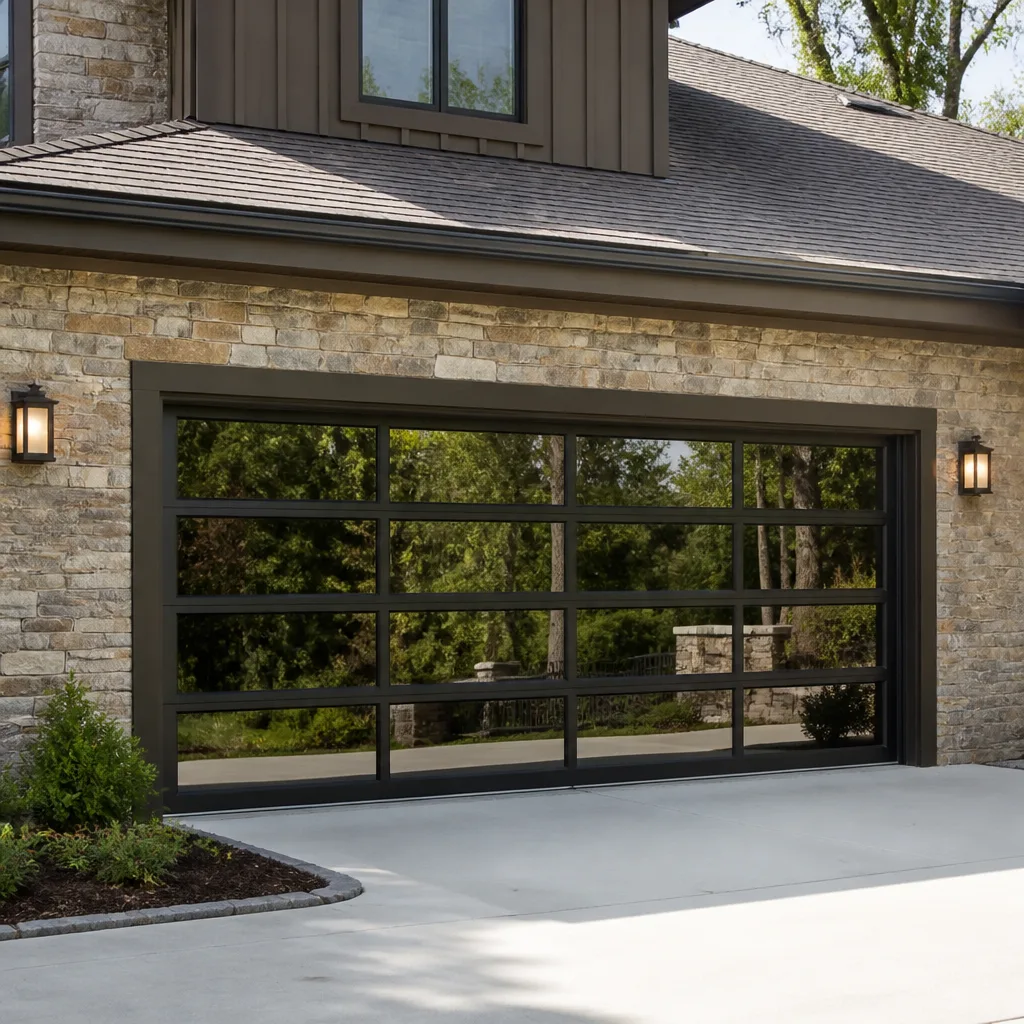 Full-view glass
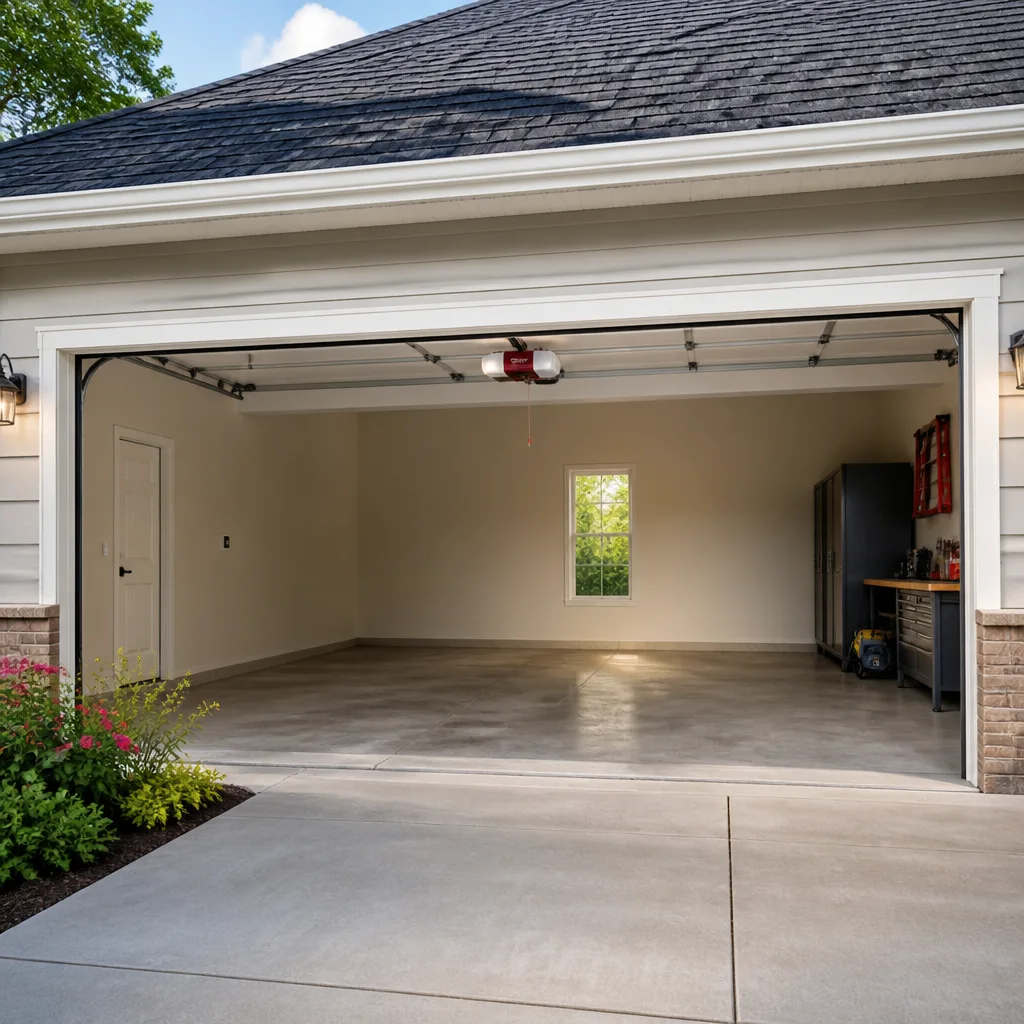 LiftMaster openers
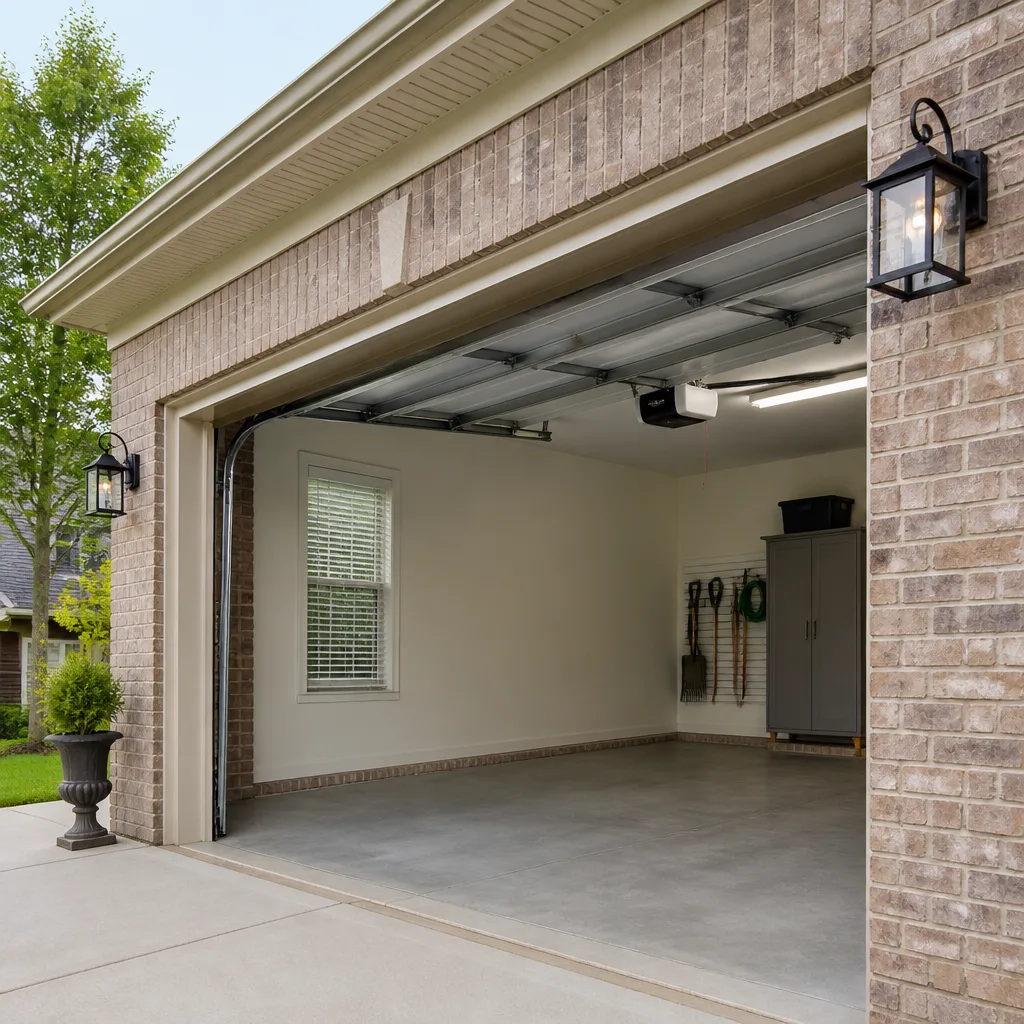 Chamberlain openers
Full 25-point door and opener safety check with every visit - springs, cables, rollers, tracks, and your LiftMaster or Chamberlain opener included
You get a price before we start. It does not change when the pro arrives.
Get your free estimateHow to Hire a Garage Door Contractor in Chesapeake: A Step-by-Step Guide
A company that lists fencing, pressure washing, and drywall repair on its sign isn’t a garage door company. It’s a handyman operation that happens to hang doors, and the difference shows up the day you call about a warranty. A specialist will know exactly which spring was installed, which opener is in the truck’s worth of brand variations, and who stands behind the work. A generalist may have moved on to the next trades by then. The garage door market in Chesapeake – like much of Hampton Roads – mixes true specialists, generalists adding a line item here and there, and big-box referral networks with no local accountability. This guide gives you a concrete framework: what to verify, what to ask, what a real estimate looks like, and which red flags matter most. You’ll finish knowing how to tell a specialist from a resume of unrelated trades.
Quick Answer
To hire a garage door contractor in Chesapeake, verify the company’s Virginia contractor license classification, confirm they work on your specific door and opener brand (not just the brands they prefer to sell), ask for a written line-item estimate with model numbers and labor broken out, and check whether they’re manufacturer-authorized or a general installer. Insist on written warranty terms before work starts. The strongest signal is single-trade focus: a company that does garage doors and only garage doors, with trained experience across the major brands – LiftMaster, Chamberlain, Genie, Clopay, Amarr, Wayne Dalton, Craftsman, and Raynor – is far less likely to guess at your system’s quirks.
Styles & brands we work with
- Raised-panel steel
- Carriage house
- Modern flush
- Full-view glass
- LiftMaster openers
- Chamberlain openers
Table of Contents
- Is Your Garage Door Contractor Licensed in Virginia?
- Manufacturer-Authorized Installer vs. General Installer
- What a Legitimate Written Estimate Includes
- OEM vs. Aftermarket Parts: What to Ask
- Chesapeake-Specific Red Flags to Watch For
- 12 Questions to Ask Before You Sign
- How Chesapeake Weather Affects Your Door System
- Common Mistakes to Avoid
Is Your Garage Door Contractor Licensed in Virginia?
Licensing is where the hiring conversation should start, and it’s the step most homeowners skip. Garage door work in Virginia falls under contractor licensing rules administered by the Department of Professional and Occupational Regulation. Which license classification applies depends on the value of the job – installation and replacement of a full door system typically requires a higher classification than a simple repair. A spring repair is often a smaller-dollar job; a full replacement is not. The safest approach is to ask the company directly which license classification covers your job and to look it up yourself.
Here’s how to verify:
- Ask the company for the legal business name and license number. A legitimate operation gives this without hesitation.
- Look up the license through Virginia’s DPOR license lookup tool. You’ll see whether the license is current, what classifications it carries, and whether it’s been disciplined.
- Confirm the classification matches the work. A company licensed for one narrow class of work may not be covered for the scope you’re hiring for.
- Ask to see a certificate of insurance for general liability and workers’ compensation. A company employing technicians should carry workers’ comp. No exceptions.
- Cross-check the business name on the estimate, the insurance certificate, and the license record. They should all match.
This is also where a specialist surfaces: a company that does garage doors exclusively holds the license and insurance for that trade specifically, and doesn’t divide its coverage or its attention across unrelated services. If the license record, insurance certificate, or estimate doesn’t line up, that’s your answer before the first call ends.
Manufacturer-Authorized Installer vs. General Installer
Manufacturer-authorized installers have a formal relationship with a brand – they’ve met the brand’s training or certification requirements and may have access to factory parts, preferred warranty handling, and factory-backed support. General installers can install the same product, but they call the brand’s parts desk like anyone else. Both can do good work. The distinction matters when something goes wrong.
Where it shows up most:
- Parts availability. An authorized installer can often get factory components faster, including legacy parts for an older door. A general installer may substitute aftermarket pieces to keep the job moving.
- Warranty coverage. Manufacturer warranties on doors and openers have conditions. Some require installation by an authorized installer to remain valid; some require proof of professional installation. If the work doesn’t meet the conditions, the manufacturer can decline a claim – and the installer is who answers.
- Brand depth. Authorization on one brand doesn’t mean fluency across others. At Highpoint Garage Door Service, we work across eight of the most widely owned brands – LiftMaster, Chamberlain, Genie, Clopay, Amarr, Wayne Dalton, Craftsman, and Raynor – rather than steering every customer toward one. Clopay and Amarr steel doors, Wayne Dalton, Craftsman, and Raynor systems, Genie and LiftMaster openers – if that’s what’s on your house, we’ve been trained on it.
Ask the question directly: “Are you a manufacturer-authorized installer for the brand you’re recommending?” If the answer is yes, ask which brand and check it. If it’s no, ask how warranty claims get handled when a part fails. The answer tells you whether you’ll get factory support or a runaround.
What a Legitimate Written Estimate Includes
A legitimate written estimate lets you compare two contractors without guessing. In our experience, the biggest single source of invoice shock is a verbal number delivered on-site with no line-item breakdown. A number alone is not an estimate – it’s an opening offer, and it can only go one direction once the truck is in the driveway.
Comparison noise disappears when every bid carries the same line items:
- Labor broken out as its own line, not bundled into the parts price.
- Parts with model numbers – not “torsion spring” but the actual brand, size, and specification.
- Warranty terms in writing: the coverage length, what’s covered (parts, labor, or both), and any conditions that void it.
- The written price confirmed and agreed before any work starts.
- A clear statement of what happens if the technician discovers something else once the door is opened up.
A vague quote leaves the door open for upsell once the tech is on-site. A line-item estimate closes it. Compare the two bids line by line: which spring, which opener, which labor rate? If one bid has less detail, ask for a revised estimate in writing before deciding. The estimate is free, and the written price is the price – no surprises, no additions after the fact unless you approve them.
OEM vs. Aftermarket Parts: What to Ask
OEM stands for original equipment manufacturer – the exact part the door or opener was built with. Aftermarket parts are made by third parties. The cost gap between the two is real, and often the tradeoff is worth understanding before you decide.
Where it usually comes up:
- Torsion springs. OEM springs match the door’s original engineering. Aftermarket springs may work, but the cycle rating and wire gauge vary by maker – this matters enormously. A spring that’s under-spec’d for your door’s weight fails far sooner.
- Cables. OEM cables are matched to the drum and door weight. Aftermarket cables can be the wrong gauge or length, and the cables and drums have to work as a matched set.
- Openers and panels. Match matters here too. An aftermarket opener that works with one door may not work cleanly with another. Aftermarket panels can fit but may have subtle differences in gauge, profile, and finish.
Two questions to ask every contractor: “Which parts are you installing, OEM or aftermarket?” and “Can I see the model numbers in the estimate?” A specialist answers both without hesitation. A company installing whatever is on hand that day may hedge.
Torsion springs and the cables under tension are genuinely dangerous to handle. A trained technician knows how to release the tension safely and how to spec the spring correctly. This is not a place to guess.
Chesapeake-Specific Red Flags to Watch For
After a significant storm rolls through Hampton Roads, out-of-area companies tend to show up with ladders and business cards, having worked up a route from two states away. They’re gone in a week. There’s no local accountability if the work fails, the warranty means nothing, and there’s no license record on file. The same pattern shows up with generalist chains from outside the region that add a garage door line for the season.
Watch for:
- No physical local address. A PO box or a street address that turns out to be a rented mailbox. Ask where the business records and staff actually live.
- No verifiable Virginia license record. A license number that returns nothing on DPOR’s lookup is a dealbreaker.
- Pressure to sign today. “This price is only good if you sign right now” or “the crew is available today only” – both mean the price is being set by the sales presentation, not the scope.
- No written estimate before work. “It usually runs about $X” is not a quote. The written price is what’s honored.
- A generalist claiming garage door specialty. The website portfolio includes full remodels, gutter cleaning, and appliance repair – garage doors are the newest side offering, not the trade.
- No warranty terms in writing. “We stand behind our work” without detail is not a warranty.
One rule that filters most of this: a company that lives in Chesapeake and works in Chesapeake has the reputation at stake – a bad install follows them home. A company passing through doesn’t.
12 Questions to Ask Before You Sign
Here’s a script to take to the call. Every question has a correct answer, and most of them make a specialist look a lot better than a generalist.
- What license classification covers this work? Ask for the legal name and license number, then verify it in DPOR’s lookup.
- Are you licensed and insured? Ask for the certificate. General liability and workers’ comp are the standards.
- Are you a manufacturer-authorized installer for the brand you’re recommending? And if so, for which brand?
- Are the springs and cables you’re installing OEM or aftermarket? And what’s the spec?
- What exactly is in the written estimate? Parts with model numbers, labor broken out, warranty terms.
- Is the price quoted and agreed before work starts? No exceptions.
- What warranty covers the parts and the labor? Get the answer in writing. Separate terms for parts vs. labor if that’s the reality.
- Who actually does the work? Directly employed technicians, subcontractors, or a partner network?
- Do you work on my brand? LiftMaster, Chamberlain, Genie, Clopay, Amarr, Wayne Dalton, Craftsman, or Raynor – whoever’s on your door.
- Can you repair the opener separately from the door? If the answer is “we’d replace the whole thing,” find out why.
- What happens if something fails after installation? Who do I call, and what does the call cost?
- Can I see two references from Chesapeake jobs in the last 12 months? Not reviews – references. And follow up on them.
We answer all twelve without a marketing pause. A specialist has the answers in hand – a generalist usually has to get back to you.
How Chesapeake Weather Affects Your Door System
Chesapeake sits in a humid, subtropical climate. Summertime humidity runs high for weeks, and the temperature swings between hot afternoons and cooler mornings happen fast. That’s hard on the mechanical parts of a garage door – especially the springs, the cables, and the opener’s motor and control board.
What to watch for in this climate:
- Spring fatigue. Repeated thermal cycling – warm days, cool mornings – slowly weakens torsion springs. They don’t usually snap during a crisis; they fail at the moment of maximum load, which is when the door is opening or closing.
- Humidity and hinges. Hinges, rollers, and tracks pull in humidity and moisture, which can accelerate wear. Regular lubrication and inspection stretch the life of these parts considerably.
- Opener motor and control board heat. A garage that’s not climate-controlled can reach high temperatures through the summer. Opener electronics are sensitive to that. If your opener behaves unpredictably in hot weather, that’s a real signal – not just a fluke.
- Wood and steel panels. Wood doors swell and contract with humidity; steel doors need their finish intact against moisture. Panel condition matters as much as the mechanics.
The climate also means that Chesapeake wear patterns don’t match what a company from outside the region expects. A contractor who works here regularly knows the seasonal rhythm – when spring fatigue shows up, when opener issues spike, when to schedule a tune-up. That’s the local context a dedicated garage door specialist brings to your house.
Common Mistakes to Avoid
- Hiring the cheapest bid without comparing line items. Two numbers can look comparable and be completely different scopes. Compare parts, model numbers, and labor. If the low bid is under one-quarter of the high bid, something is missing – or the high bid is padding.
- Skipping the license check. A verbal assurance of a license or insurance isn’t verification. Look it up in DPOR’s record. Five minutes now prevents months of complication if a warranty issue surfaces later.
- Not asking whether the parts are OEM or aftermarket. Aftermarket parts aren’t automatically bad, but the tradeoff matters for springs and cables. Know what’s being installed in your door.
- Accepting a verbal estimate. A number on-site without line items is not a quote. Insist on a written estimate before any work. This is especially important in Chesapeake, where storm-lined routes bring temporary companies into town – a verbal price from someone who doesn’t live here has no floor.
- Skipping the warranty terms. “We stand behind our work” means nothing if it’s not in writing with a specific timeline and clear conditions. Get it in writing before the technician starts.
- Choosing a generalist because they answered the phone first. The handyman who does garage doors as one of many offerings may know enough to replace a spring – and nothing about the opener’s control board or the specific quirks of a Clopay or Amarr door. The fix works until it doesn’t.
- Ignoring the opener. A door that opens and closes is only half the system. If your opener is old or behaving erratically, that’s a separate repair decision – not a reason to replace the whole door.
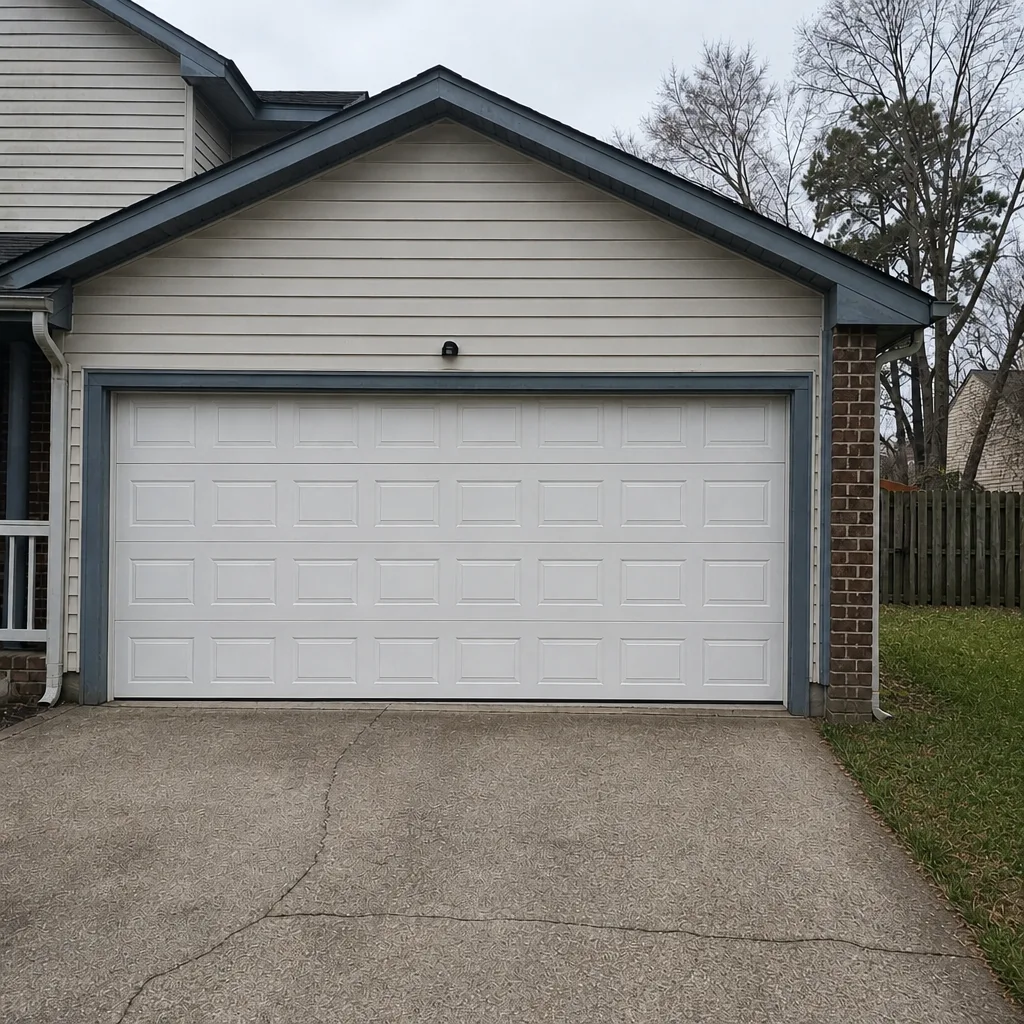
See the difference
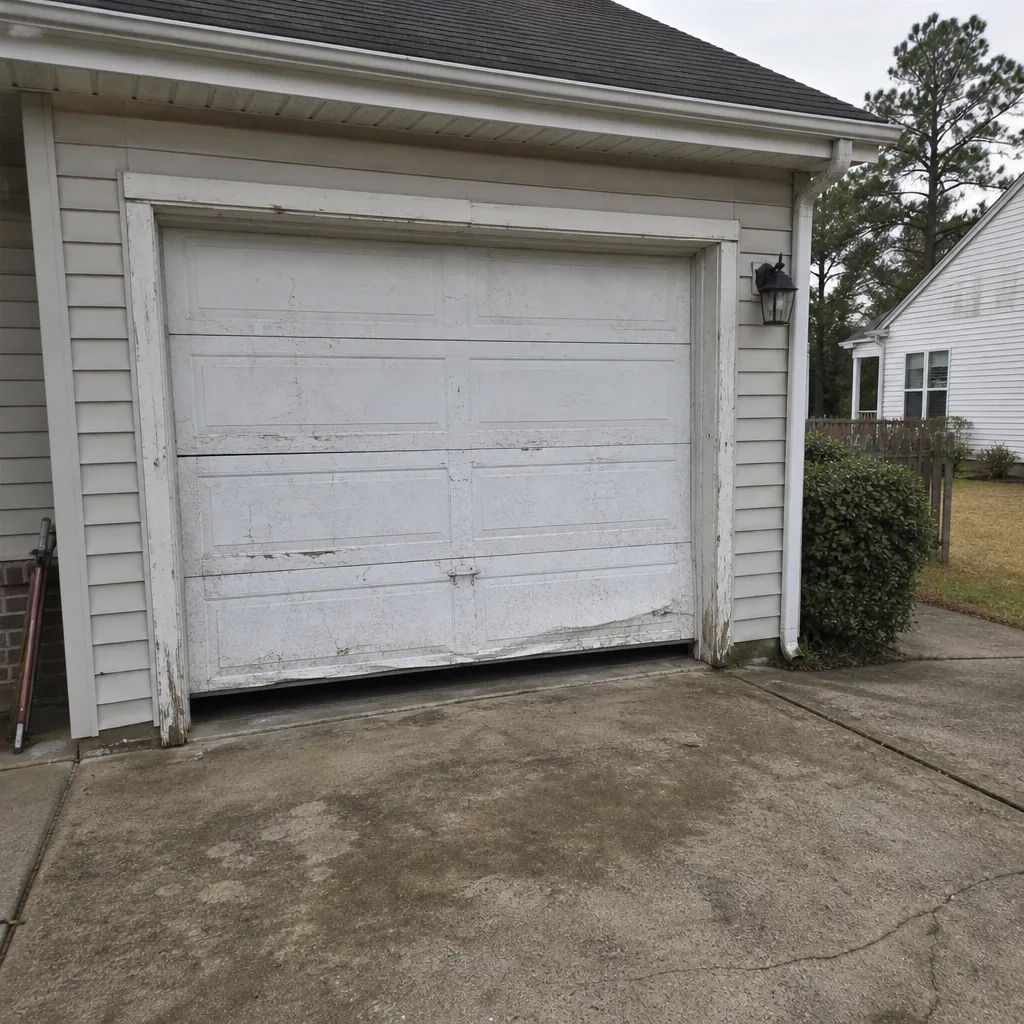 Before
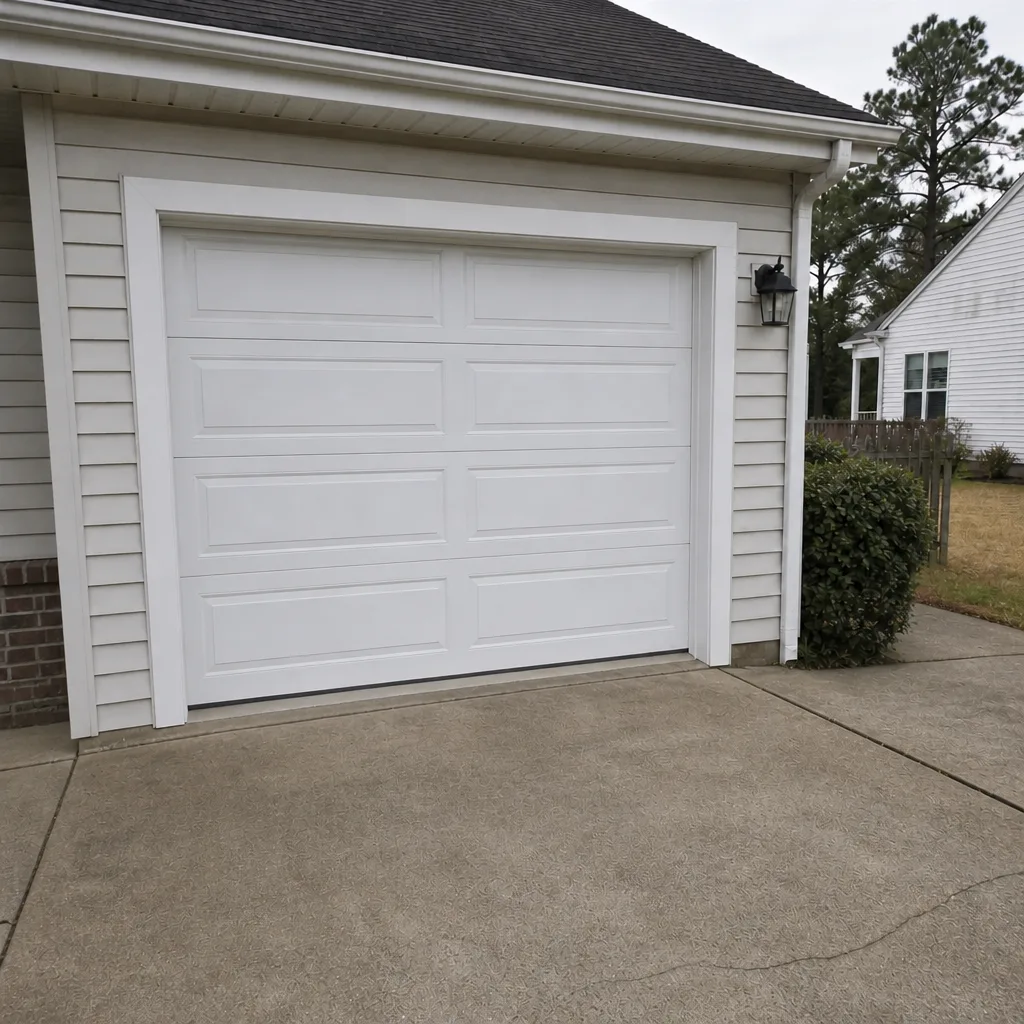 After
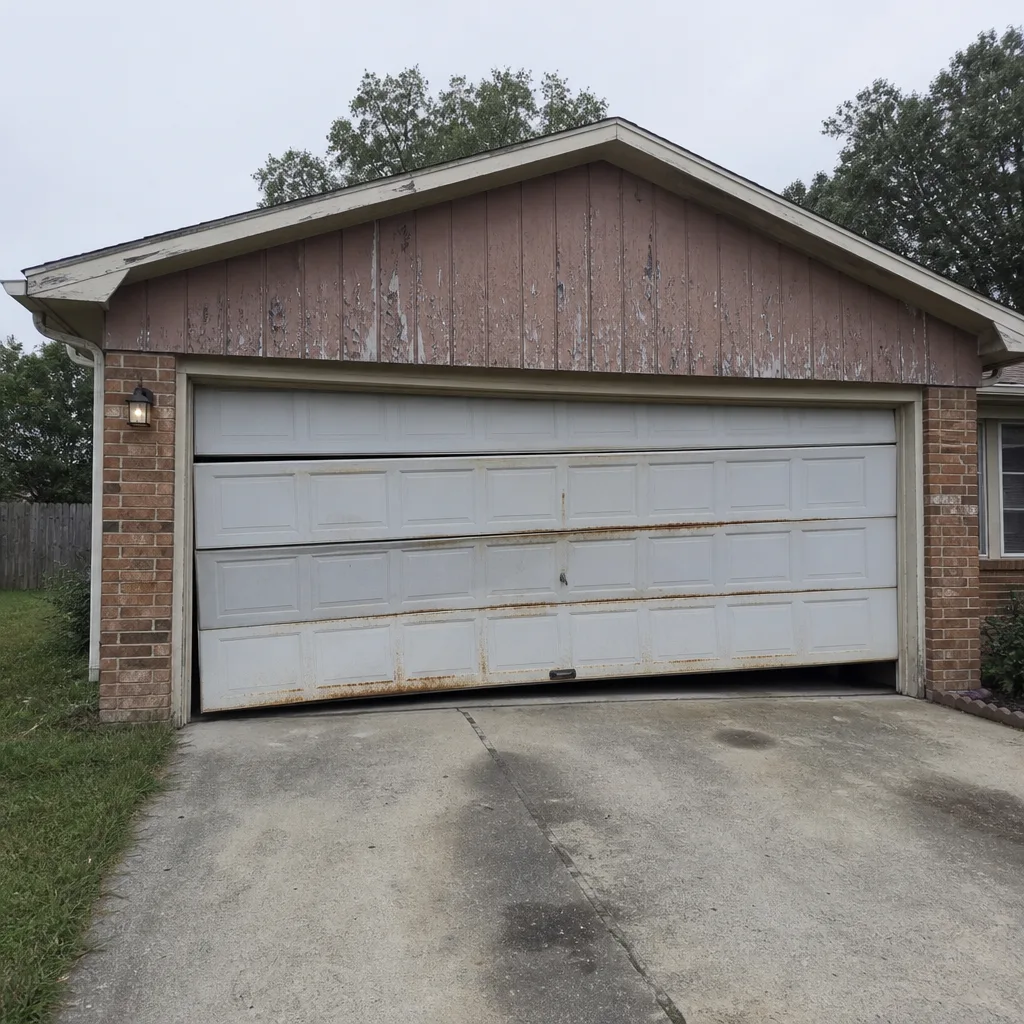 Before
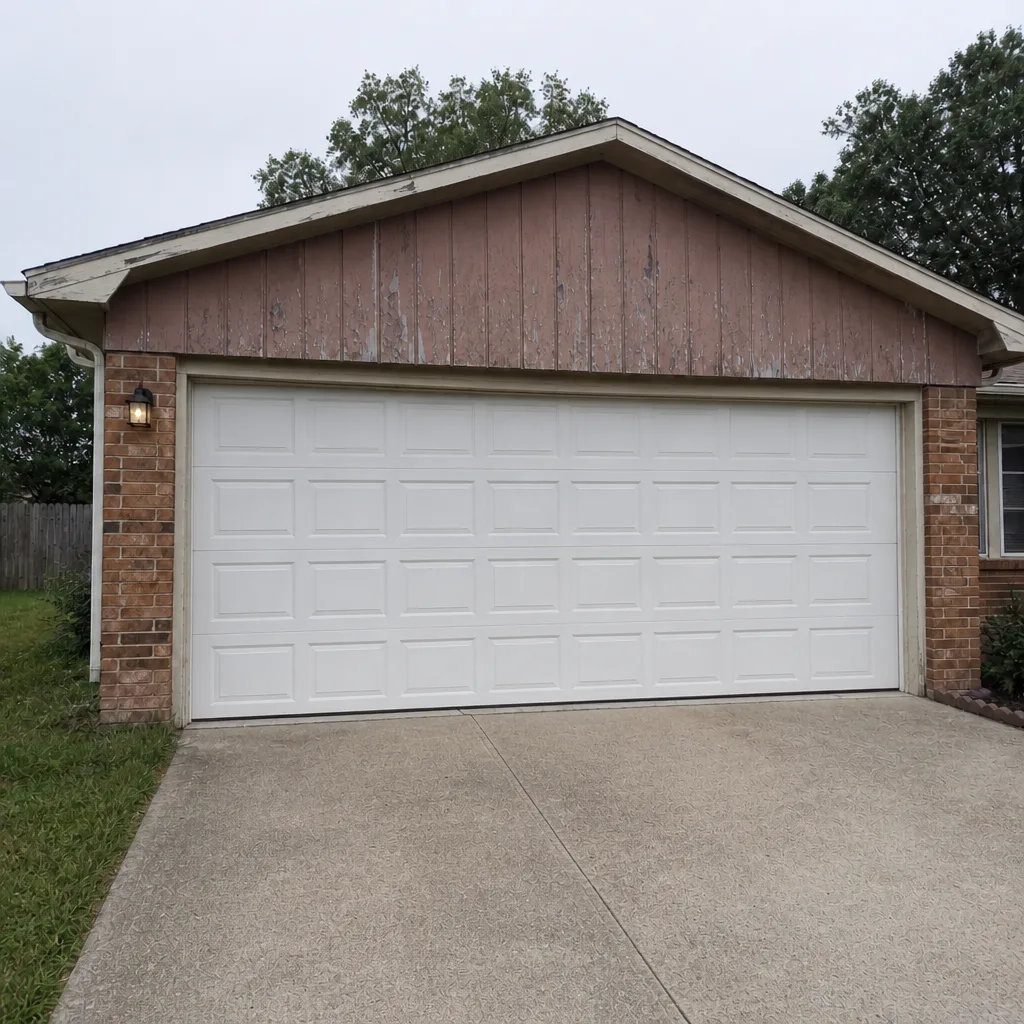 After
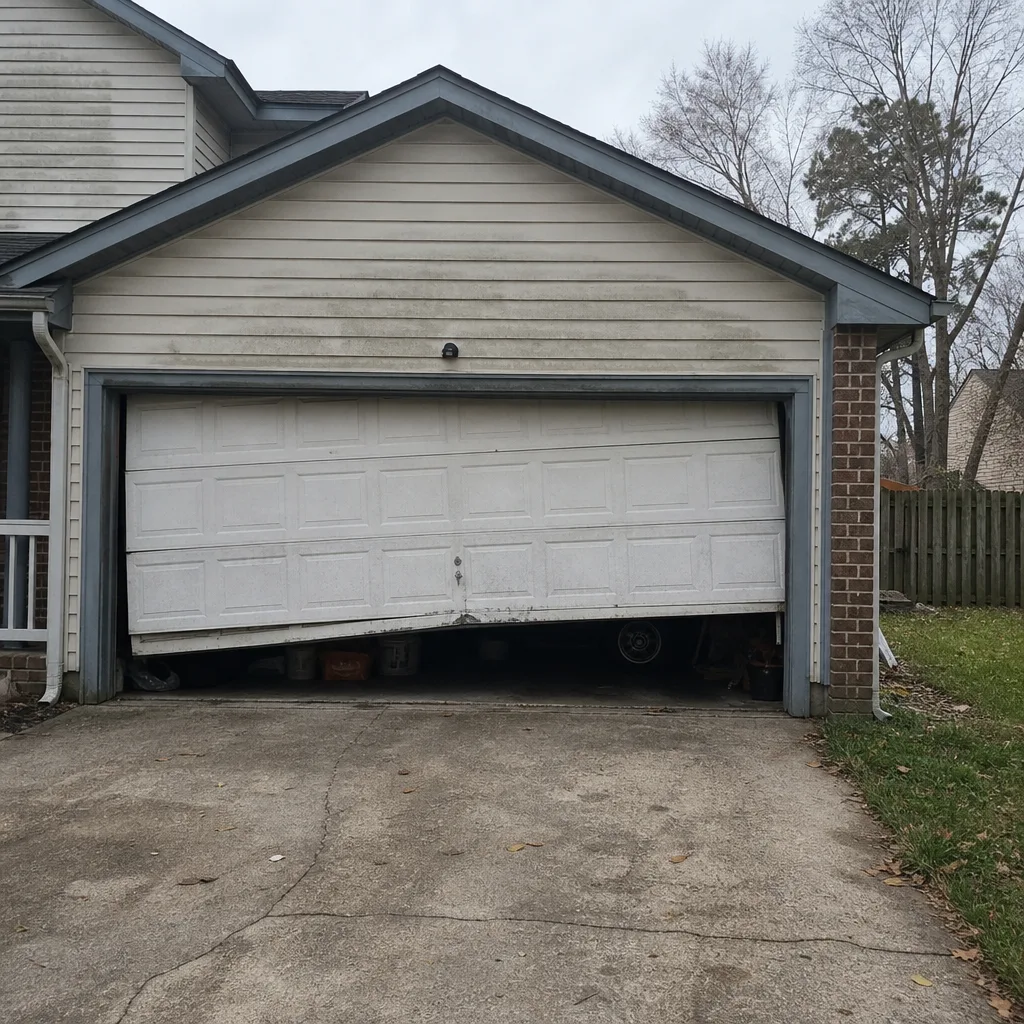 Before
 After
When to Call a Professional
Some garage door problems are obvious emergencies: the door won’t open or close (there’s an obstruction or a broken spring), the door comes off the track, a cable snaps, or the opener motor runs but nothing moves. These aren’t DIY-friendly – torsion springs and cables under tension can cause serious injury, and a door that comes off its track is a safety risk. Then come the slower problems: a door that’s getting harder to close, a noisy opener, a remote that stops working, or intermittent opener behavior that gets worse in hot weather. Those are worth a professional look before they turn into a bigger repair.
For a torque-for-torque check on any of this – whether it’s a Chesapeake repair or a new install – call Highpoint Garage Door Service at (877) 309-4107. Free estimates, written price agreed before work starts, and technicians with up to 15 years of experience across the major brands. We answer 24/7. Fast dispatch from 7am to 7pm.
Frequently Asked Questions
Torsion spring replacement in Chesapeake typically runs in the low-to-mid hundreds per spring, and a matched pair – which most doors use and which we usually recommend replacing together – roughly doubles that. The written estimate sets the final price, and it’s confirmed before any work starts. Call (877) 309-4107 for an exact quote – estimates are free.
In most cases, yes. We schedule fast dispatch from 7am to 7pm, Sunday through Friday, and same-day service is common for repair calls in Chesapeake. Openers and springs are the fastest to schedule. A call outside dispatch hours is booked into the next opening, Sunday through Friday. Call (877) 309-4107 – we answer 24/7.
No. We quote the price, you agree, and we work to that written estimate. If something else is found once the door is opened up, we tell you what it is, what it costs, and get your approval before touching it. No surprises. Call (877) 309-4107 for a free estimate.
Yes. Highpoint Garage Door Service is a licensed and insured garage door specialist. Ask for the license number and insurance certificate – we’ll provide them. Our technicians have up to 15 years of experience on the major door and opener brands. Call (877) 309-4107.
In almost every case, yes. We’re trained across eight of the most widely owned brands – LiftMaster, Chamberlain, Genie, Clopay, Amarr, Wayne Dalton, Craftsman, and Raynor. If your opener or door is one of these, we know it. Call (877) 309-4107 to confirm your brand before scheduling.
Repair is usually the right answer when the door’s panels and structure are still sound and only the mechanical parts have failed – a spring, a cable, a roller, or the opener. Replacement makes more sense when the door has structural damage, failed multiple repairs in a short window, or you’re upgrading to a different material or opener system. We’ll evaluate and give you both paths in writing. Call (877) 309-4107.
In most cases, yes. Bring us the model number and the manual when you call. We’ll confirm compatibility and schedule the install. If the unit is incompatible with your door, we’ll tell you before the appointment. Call (877) 309-4107.
The Bottom Line
Hiring a garage door contractor in Chesapeake comes down to five checks: verify the Virginia license record, confirm brand experience for your specific door and opener, demand a line-item written estimate with OEM or aftermarket parts called out, ask for warranty terms in writing, and watch for out-of-area companies that disappear after the job. A specialist – someone who does garage doors as their trade, not a side offering – passes all five without effort. A generalist usually doesn’t. Whether you’re scheduling garage door repair or a full new installation in Chesapeake, the reason to hire carefully is simple: the fix needs to hold, the opener needs to keep doing its job, and the warranty needs to mean something when you call back.
Ready to get a written estimate? Call Highpoint Garage Door Service at (877) 309-4107 for a free estimate. We answer 24/7. Fast dispatch from 7am to 7pm, Sunday through Friday. Whether your door needs a spring replaced or a full new door installed, the Highpoint standard applies – brand-agnostic work, single-trade depth, and the price agreed before the technician starts.
Written by the team at Highpoint Garage Door Service.