
Last updated November 15, 2026
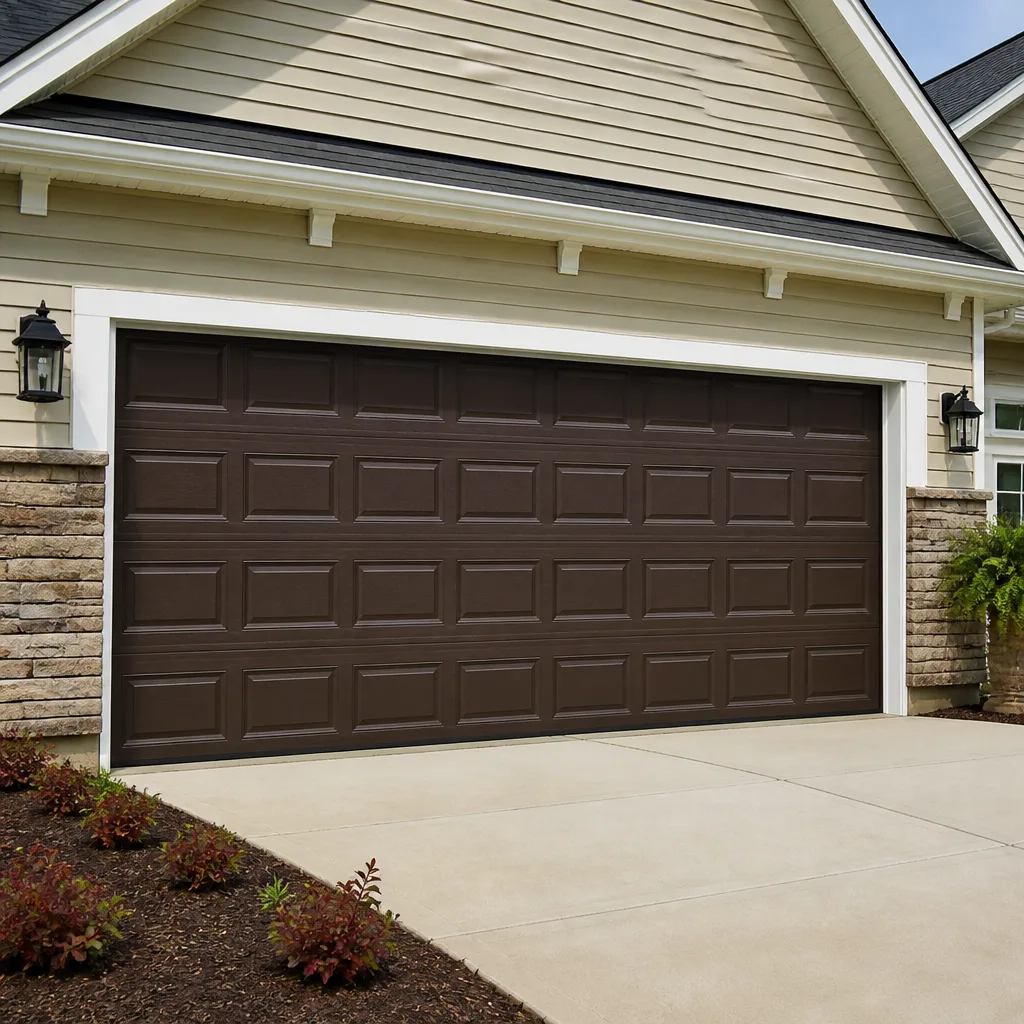 Raised-panel steel
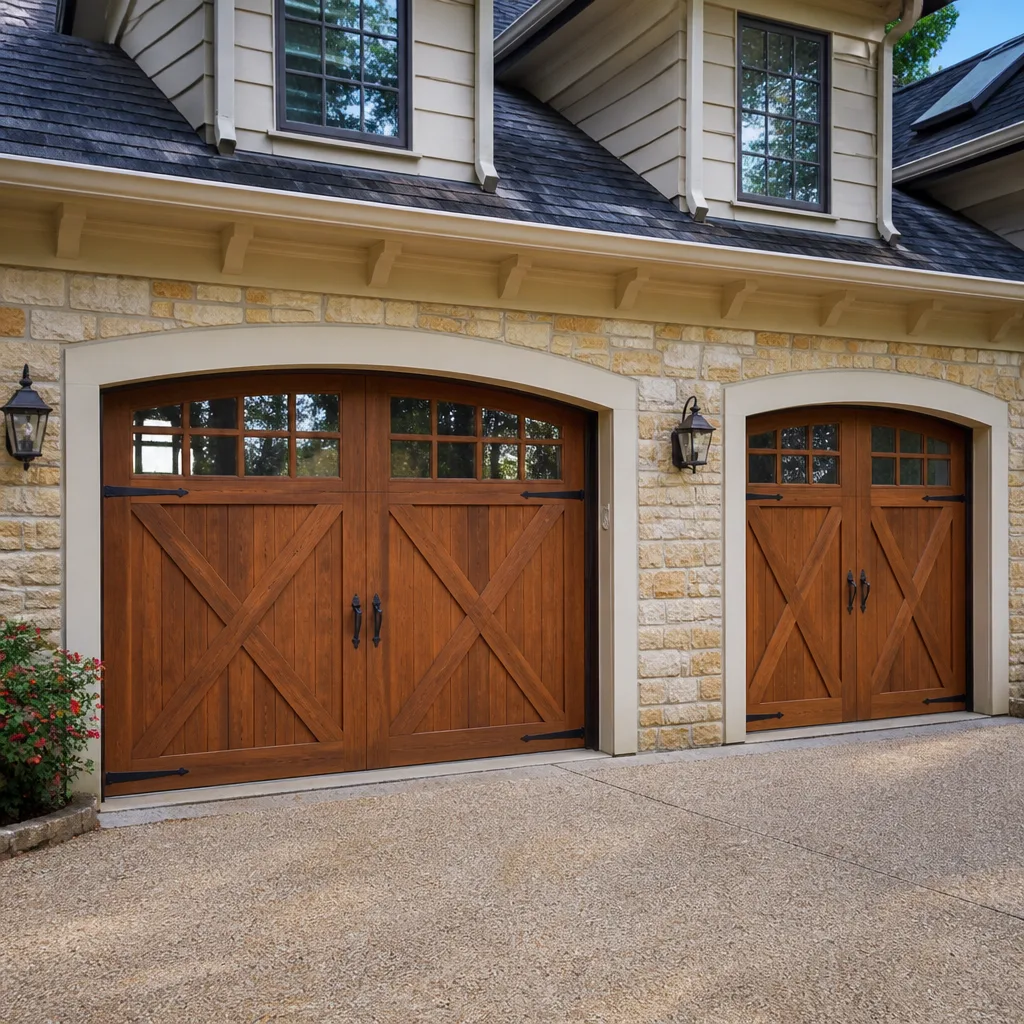 Carriage house
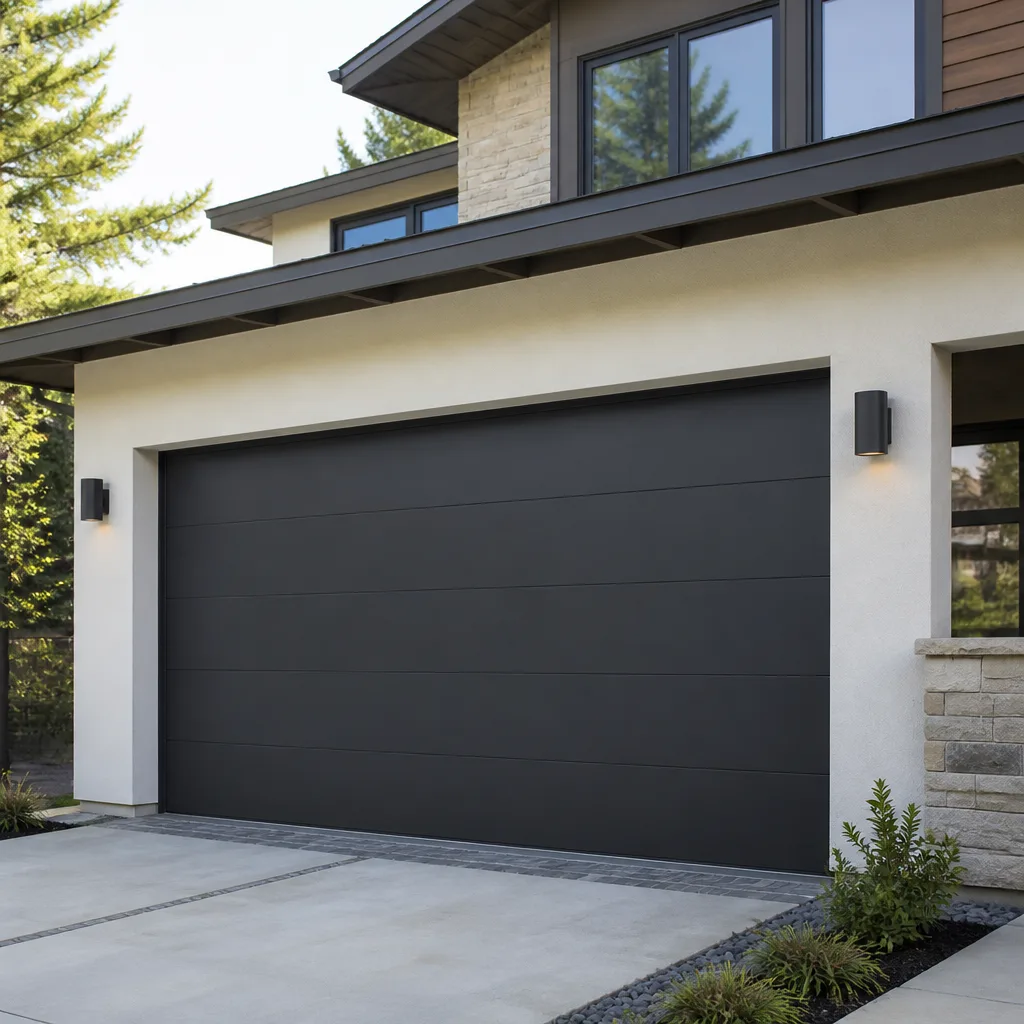 Modern flush
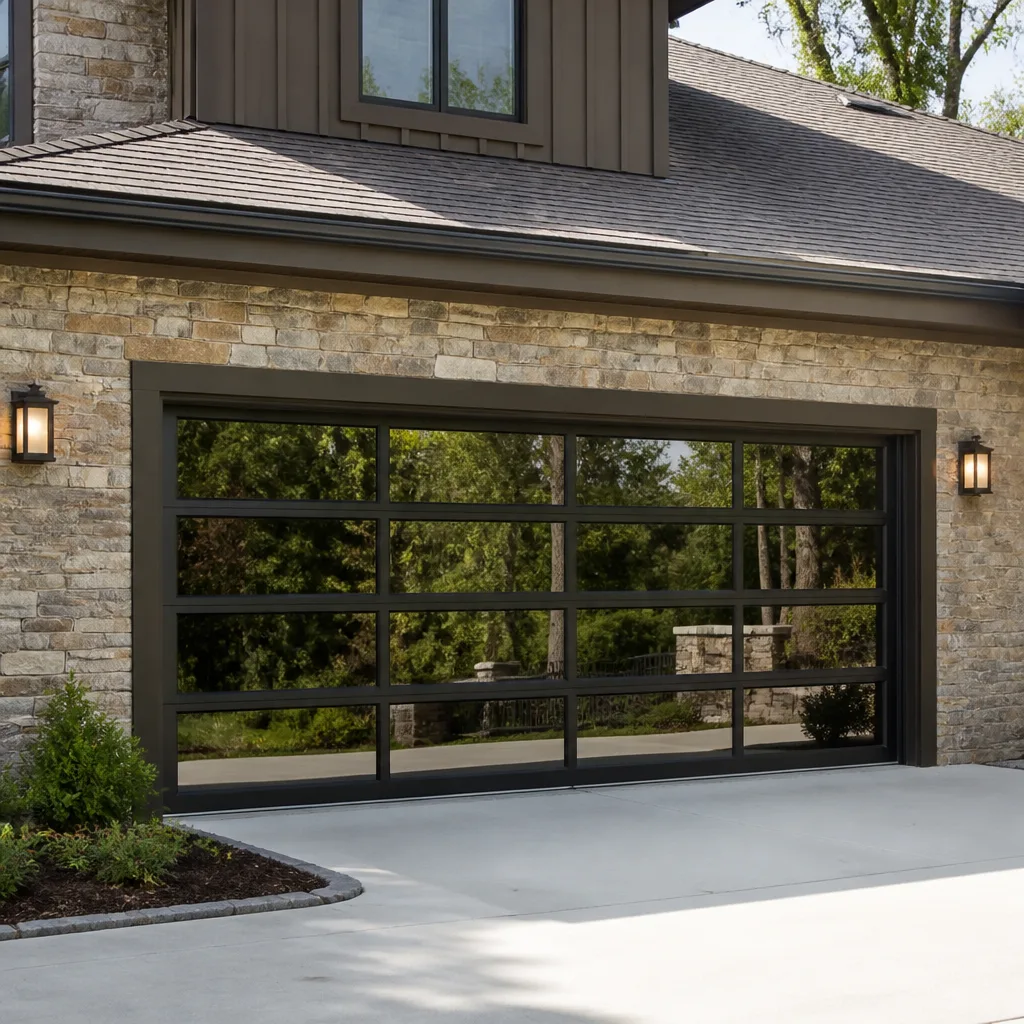 Full-view glass
 LiftMaster openers
 Chamberlain openers
Full 25-point door and opener safety check with every visit - springs, cables, rollers, tracks, and your LiftMaster or Chamberlain opener included
You get a price before we start. It does not change when the pro arrives.
Get your free estimateChoosing the Right Garage Door Brand: A Buyer’s Guide for Chesapeake
The brand printed on a garage door matters far less than the gauge of the steel, the quality of the paint system, and whether a technician in Chesapeake can get replacement parts for it without a two-week wait. Most homeowners start their search by asking which brand is best, then pick a door from whoever answers first. That order is backwards. In Chesapeake, a garage door faces heat, humidity, wind-driven rain, and the occasional tropical system, and it does that on an attached garage that’s often the biggest opening in the house. What you’re actually buying is a set of specifications plus a support network, not a logo. This guide walks through how to read corrosion claims, wind ratings, insulation numbers, and warranty language so the brand you choose holds up ten years from now.
Quick Answer
The right garage door brand for a Chesapeake home is the one whose steel gauge, coating system, wind-load certification, and insulation numbers fit your house and your budget, and whose parts a local technician can actually source. Brand reputation helps, but corrosion protection, wind-rated construction, and service availability in the Hampton Roads market decide whether you’ll be happy in year eight. Look at spec sheets and local parts support before you look at showroom finishes.
Styles & brands we work with
- Raised-panel steel
- Carriage house
- Modern flush
- Full-view glass
- LiftMaster openers
- Chamberlain openers
Table of Contents
- Why Brand Matters Less Than You Think (And Where It Still Matters)
- How to Evaluate Corrosion Resistance Claims
- Wind Load Certification by Brand
- The Parts and Service Ecosystem in Hampton Roads
- R-Value Claims Compared: What the Numbers Actually Mean
- Decoding Brand Warranty Language
- Matching a Door Brand to Your Opener
- A Step-by-Step Process for Choosing in Chesapeake
Why Brand Matters Less Than You Think (And Where It Still Matters)
Garage door manufacturing is a concentrated industry. A handful of companies build the steel, panels, and hardware that get sold under brand names you recognize, and several of those brands share suppliers, standards, and even assembly lines. Two doors with different names on the box can have nearly identical steel gauge and finish systems, and two doors from the same brand can differ enormously depending on which product line you bought. That’s why brand name alone tells you very little.
Where brand does matter is consistency and accountability. A brand that publishes detailed spec sheets, certifies its doors to industry wind standards, and backs its product with clear warranty terms is easier to hold to a standard. A brand that hides its steel gauge behind marketing language and offers vague warranty coverage is harder to trust. In our experience, the homeowners who end up happiest with a garage door in Chesapeake are the ones who compared actual specifications, not the ones who chased the most advertised name.
Three things the brand name should tell you:
- Specification transparency: does the manufacturer publish steel gauge, coating type, and wind-load ratings in writing, or only in sales brochures?
- Warranty specificity: are the exclusions spelled out, especially surface corrosion and finish fading?
- Parts availability: can a technician in Chesapeake order a replacement panel, hinge, or bottom seal for that model without a special order cycle measured in weeks?
At Highpoint Garage Door Service, we work with LiftMaster, Chamberlain, Genie, Clopay, Amarr, Wayne Dalton, Craftsman, and Raynor products. That range exists because we work on what people already own, not because any one brand is the answer for every house. When you’re comparing options, our job is to point you toward the door that fits your home and your weather exposure, and then install it to the manufacturer’s specification. If you want an honest assessment before you buy, a garage door repair visit is often the fastest way to learn what your current door’s limits really are.
How to Evaluate Corrosion Resistance Claims
Corrosion resistance is the single most underrated spec in a Chesapeake garage door purchase. Humidity here is high through much of the year, rain-driven moisture reaches the door face, and plenty of homes sit within a short drive of tidal water. You’ll see three terms on spec sheets: galvanized steel, Galvalume, and polyurethane-backed panels. Here’s what each actually means for a door in this climate.
Galvanized steel
Galvanized steel is carbon steel coated in zinc. The zinc sacrifices itself to protect the steel underneath, which is why a scratched galvanized panel rusts slowly rather than immediately. Standard galvanizing on garage doors is typically a relatively light zinc coating. It’s fine for protected locations but can struggle on a north-facing door that never fully dries.
Galvalume
Galvalume is a coating that combines zinc and aluminum. The aluminum adds heat reflectivity and forms a tougher barrier against moisture than plain galvanizing. On a door that gets full afternoon sun, a Galvalume-based coating resists the combination of heat and humidity that shortens the life of lesser finishes. If you’re comparing two doors with otherwise similar specs, ask what coating the steel carries.
Polyurethane-backed panels
Polyurethane-backed panels bond a layer of foam insulation to the back of the steel, and that bond matters for more than warmth. A bonded panel resists the vibration and flexing that eventually stresses paint systems and creates gaps at seams. The paint on a backed panel has a stronger substrate. This is one of the practical reasons insulated doors tend to outlast non-insulated ones in humid climates.
What to ask any seller about corrosion protection:
- What is the steel gauge and the coating process (galvanized, Galvalume, or a proprietary multi-layer system)?
- What does the paint or finish system include – a baked-on base coat, a primer, and a top coat, or a single finish layer?
- Does the warranty cover surface rust and finish fading, and for how long?
- Are the hinges, rollers, and bottom seal galvanized or stainless, or are they painted steel that will rust first?
Finish hardware is often the weak link in a door purchase. The door itself can be well made and still rust at the hinges within a few years if those parts are cheap painted steel. Ask specific questions about the hardware package, not just the panels.
Wind Load Certification by Brand
Chesapeake sits in a region where wind exposure is a real design consideration. The garage door is the largest moving panel on most homes, and it’s the part that fails first in a strong wind event if it wasn’t built for the load. That’s why the most important wind question isn’t about brand at all – it’s whether the specific model you’re buying carries a wind-load rating.
What a wind rating means
Manufacturers certify wind-rated doors through standards work aligned with ANSI/DASMA. A rated door is tested and labeled with a design pressure rating that maps to a wind speed and exposure category. The rating isn’t just about the panels: the door’s track, hinges, and reinforcement system are all part of what makes it hold. A wind-rated door installed without the reinforcement the manufacturer specifies is not a wind-rated door.
How the rating maps to Chesapeake
Your home’s exposure category depends on where it sits – open ground, suburban density, tree cover, and proximity to open water all shift it. A building official or the door manufacturer’s specifier can tell you what design pressure your location calls for. When you compare brands, compare the rated door options each one offers, not just their base models. Some manufacturers offer a wide range of certified wind-rated doors across their product lines; others offer limited rated options. Ask directly: “Is this specific model wind-rated, and what design pressure does it carry?” Then ask for the certification in writing.
Reinforcement and installation
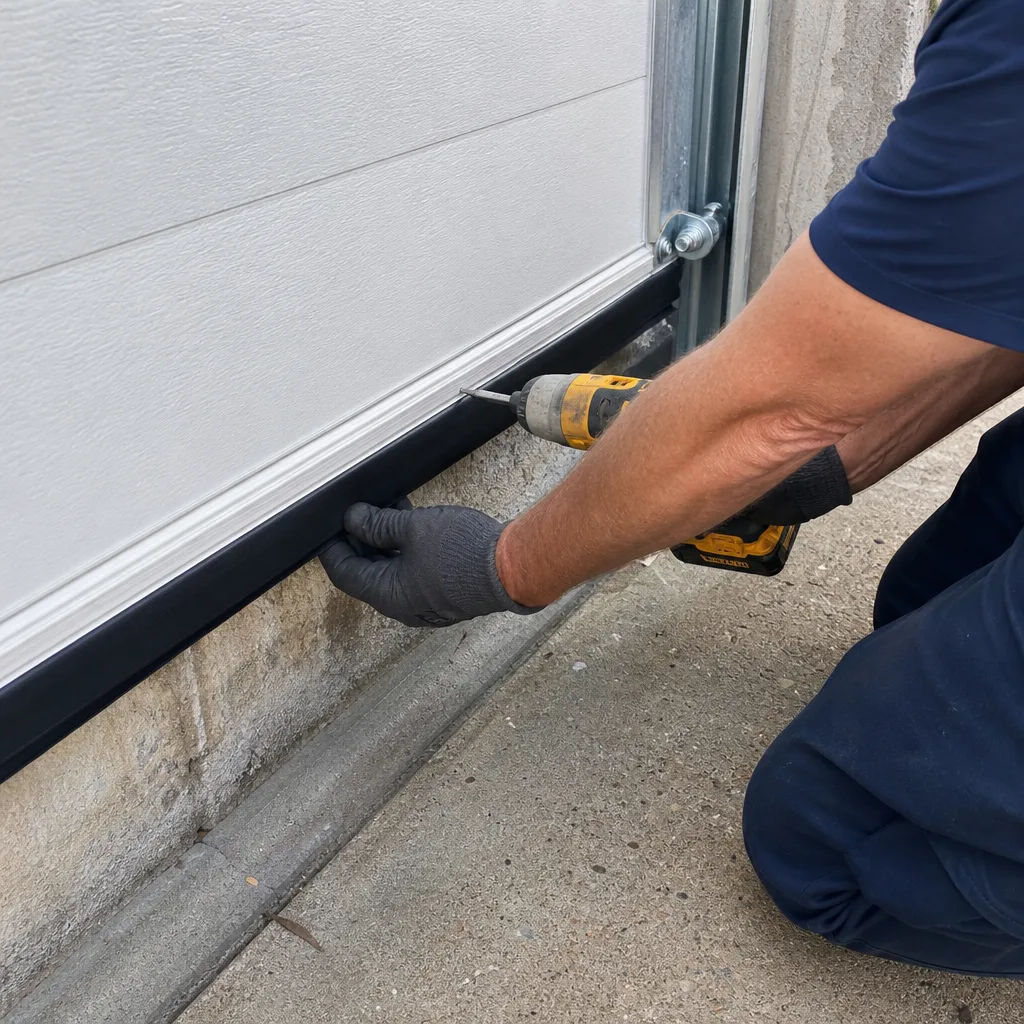
Even a rated door needs the right installation to perform. That means correct reinforcement struts, the manufacturer’s specified anchor spacing, and track sized for the load. The technician doing the install matters as much as the label. A properly rated door that’s installed loosely or with the wrong track can fail in the same wind as a non-rated door. This is where working with a specialist rather than a generalist affects the outcome: an installer who understands what a wind-rated assembly is supposed to look like will notice when a door can’t perform to spec.
The Parts and Service Ecosystem in Hampton Roads
A door brand with no local service network is a long-term support problem no matter how good the door is out of the box. Garage doors need repair. Springs eventually fail, panels and bottom seals wear, rollers and hinges need replacement, and openers are eventually reset, repaired, or replaced. All of that requires parts. If a brand can only be serviced through a distant dealer with a special-order wait measured in weeks, you’ll feel that every time something needs fixing.
What to verify about parts and service availability before you buy:
- Is the model still in production? Discontinued doors can sit on a dealer’s floor for years before they’re sold. Ask whether the brand still manufactures that model line and how the parts catalog is maintained for older doors.
- Are repair parts available locally? Rollers, hinges, tracks, bottom seals, and spring assemblies should be common items for the door you select. Ask a technician who works on the brand routinely whether parts for that model are easy to source.
- Are replacement panels available? If a single panel gets damaged, you’ll need a matching replacement. Some brands and model lines keep replacement panels available longer than others. This single factor determines whether a panel ding turns into a new door or a simple repair.
- Do openers and doors pair well? If you also need a new opener, the door brand and opener brand should be a sane combination. A heavy insulated door needs an opener rated for that door’s weight and travel, and some pairings work more smoothly than others.
In Chesapeake and across Hampton Roads, availability of major-brand parts is generally good, but you still want confirmation before you commit. Ask the technician you’re working with whether they’ve serviced that specific model family. An experienced specialist should be able to tell you what’s typically easy to get and what isn’t.
R-Value Claims Compared: What the Numbers Actually Mean
R-value is everywhere in garage door marketing, and almost nobody reads it correctly. Two doors can list very different R-values and perform nearly the same in your home. The reason is a difference between center-of-panel R-value and total R-value, and manufacturers don’t always tell you which one they’re quoting.
Center-of-panel vs. total R-value
Center-of-panel R-value measures the insulation material at the middle of a panel, where there’s no hardware, no seams, and no frame. It’s the best-case number, and it’s flattering. Total R-value accounts for the whole door assembly – the seams between panels, the thermal bridges at hinges and stiles, and the perimeter where the door meets the frame. It’s always lower, and it’s the number that matters for how much heat moves through your door.
When a manufacturer quotes a high R-value, ask which one it is. If the answer is “center of panel,” expect the effective performance of the whole door to be meaningfully lower. Some manufacturers quote total tested R-value to industry methods, and those numbers are directly comparable. If two brands quote numbers that differ wildly but you can’t tell whether both are measured the same way, you can’t compare them.
What matters for an attached garage in Chesapeake
An attached garage shares walls and often a ceiling with conditioned living space. In Chesapeake’s climate, the biggest comfort and energy issue is usually heat gain in the summer, not heat loss in the winter, and a garage door that absorbs and conducts solar heat warms the adjacent rooms. Insulated, backed panels reduce that heat transfer. The garage door opener capacity also matters: heavier insulated doors need the right opener rating, so if you’re upgrading insulation, verify the opener can lift the new door’s weight.
Practical insulation questions for a Chesapeake buyer:
- Is the quoted R-value a total or center-of-panel number?
- Are the panels filled with polyurethane foam (higher density, usually stronger bond to the steel) or polystyrene (lighter, less effective)?
- Does the door have thermal breaks between panels to reduce heat conduction at the seams?
- Is the opener you have or plan to buy rated for the door’s weight?
If your garage is detached, insulation matters less unless you use the space as a workshop. If the door opens into a room you heat and cool, insulation belongs on the spec sheet right next to wind rating.
Decoding Brand Warranty Language
“Lifetime” warranty is the most overread term in the industry. What it usually means is that a specific component – often the spring, sometimes the door sections – is covered for as long as you own the home, subject to a long list of exclusions. It rarely means the brand will replace your whole door if something fails. Read the terms carefully before you commit, and compare across brands the same way you’d compare R-values.
What lifetime coverage typically covers
- Springs: often covered against breakage for the life of ownership. This is usually the headline.
- Structural components: sometimes covered, but usually limited to manufacturing defect, not damage or wear.
- Section struts and some winding hardware: coverage varies by brand and model line, so check the specific line you’re buying.
What’s commonly excluded
- Surface rust and finish issues: corrosion and paint fading are frequently excluded. If you live in an area with heavy moisture exposure, that matters for the door you’re buying.
- Damage from misuse or from vehicles: if a car hits the door, the warranty is done. That’s an insurance claim, not a warranty claim.
- Warranty voiding from improper installation or unauthorized repair: this is where who installs your door becomes a warranty issue, not just a quality issue.
- Cosmetic wear and weathering: finishes on any door will weather over time, and most warranties don’t cover appearance.
Ask for the warranty in writing, compare exclusions side by side, and make sure the installer is working to the manufacturer’s specification. A claim you can’t file because the installation didn’t match the manual is worth nothing. When a technician from Highpoint Garage Door Service hands you a quote, ask them to walk you through the warranty terms on the door you’re considering – a specialist who works with multiple brands should be able to explain what each one actually covers.
Matching a Door Brand to Your Opener
The garage door and the opener are one system, and they need to be spec’d together. A heavy insulated door paired with an opener rated for a light door will strain the motor, wear the drive components faster, and eventually fail. If you’re replacing a door and keeping your opener, verify the opener’s lift rating against the new door’s weight before you commit.
What to check on the opener side
- Lift rating: what weight the opener is rated to lift. Compare this to the door’s actual weight, not its nominal brand.
- Drive type: belt, chain, screw. These differ in noise, maintenance, and smoothness, and some doors pair better with each type.
- Age: an opener that’s older than the door you’re replacing may not have the features or the capacity the new door needs, which brings us to garage door opener repair or replacement as a paired service.
- Safety reversal: the opener’s safety sensors need to function correctly with the new door. That’s not a warranty issue – it’s a safety requirement.
If you’re replacing the door, and especially if you’re upgrading from a light door to a heavy insulated one, evaluate the opener as part of the same project. Retail garages in neighborhoods like Great Bridge, Greenbrier, and Western Branch often pair a heavier insulated door with a belt-driven opener for a quieter, smoother operation, which is a reasonable combination. But the pairing logic is universal: rated opener for the rated door.
A Step-by-Step Process for Choosing in Chesapeake
Here’s the sequence to follow so brand selection doesn’t happen in a vacuum. Each step checks a fact you can verify.
- Measure your opening and note the home’s wind exposure. Door size and location are inputs, not afterthoughts. A garage on an open lot faces a different load than one tucked behind trees.
- Decide what the garage is for. If it’s an attached garage holding the family car, insulation and quiet operation matter. If it’s a detached workshop, insulation may not.
- Collect spec sheets from three brands. Look specifically for steel gauge, coating type, wind-load rating, and total R-value. If a brand won’t publish a spec, that tells you something.
- Ask about parts availability for each candidate model. A brand with good local support is easier to live with than one with a strong name and no service network.
- Read the warranty side by side with the quotes. Compare exclusions, not just durations.
- Get an installation estimate from a garage door specialist. Confirm the door you select will be installed to the manufacturer’s spec and that the opener is rated for it.
- Buy once, install once. Switching doors after a failed install costs more than the original spec check ever would have.
In Chesapeake, this process works for replacement and new construction alike. You might compare Clopay, Amarr, and Wayne Dalton options, or look at Raynor and Craftsman recommendations from a trusted installer. The specific brand matters less than the process you use to evaluate it. If you want help making the call, contact us and we’ll walk through your garage with you.
Common Mistakes to Avoid
- Choosing by brand name alone. Two doors from the same brand can differ dramatically in quality. Buy the specific model’s specs, not the logo, because that’s the thing that will hold up in Chesapeake’s humidity.
- Ignoring corrosion coating specs. Galvanized, Galvalume, and multi-layer finish systems perform very differently in humid climates. A cheap finish on a good brand will still rust indoors and out.
- Comparing R-values without knowing which kind they are. A center-of-panel R-value isn’t comparable to a total R-value. If the seller can’t tell you which one they’re quoting, don’t compare it.
- Skipping the wind-load certification question. In Chesapeake, wind exposure is real. A non-rated door on a high-exposure site is a shortcut you’ll regret, and a rated door installed without the correct reinforcement is no better.
- Buying a door with no local parts support. A name brand without a service network in Hampton Roads means long waits and higher repair costs down the line.
- Pairing a heavy door with an underpowered opener. Matching a new insulated door to an old light-duty opener strains the whole system and causes failures.
- Letting a general handyman install a rated door. Wind-rated doors require specific installation to perform as tested. When the installer isn’t working to the manufacturer’s spec, the warranty and the performance are both gone.
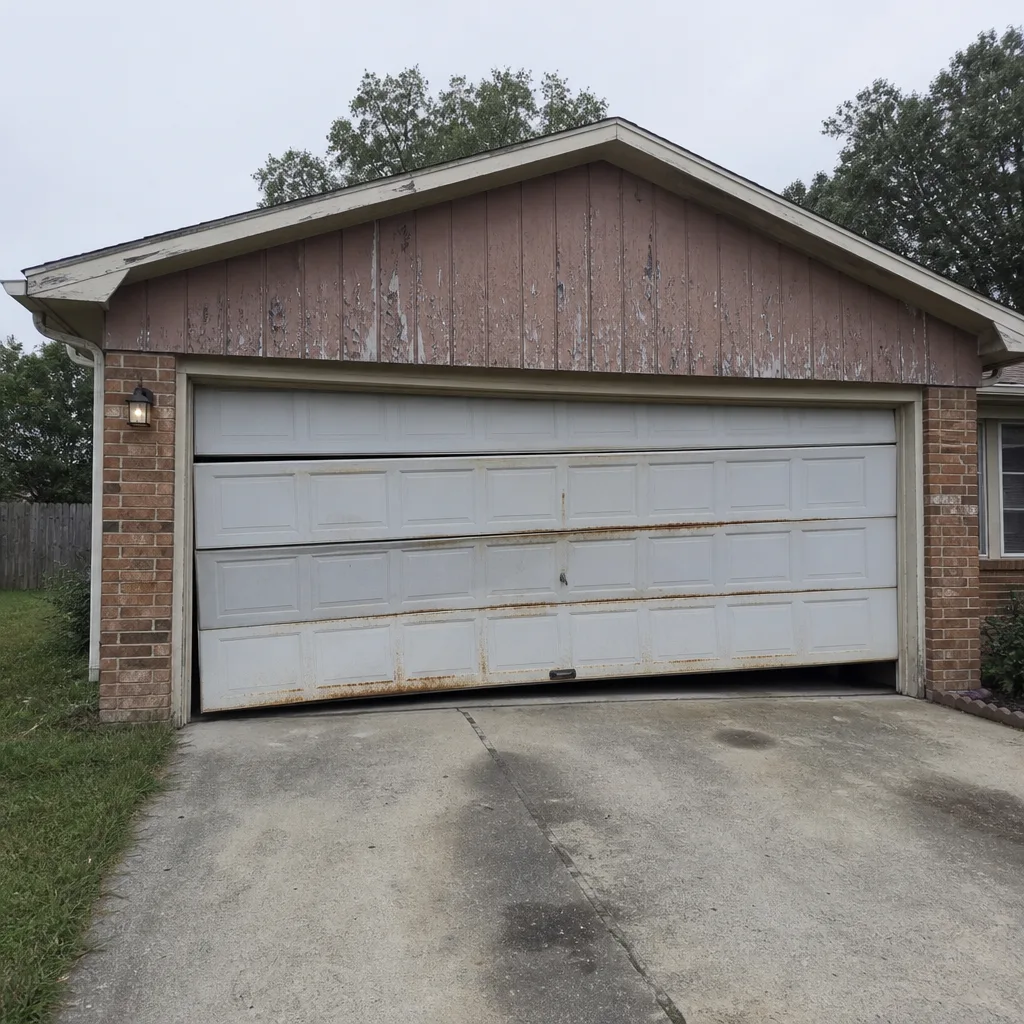
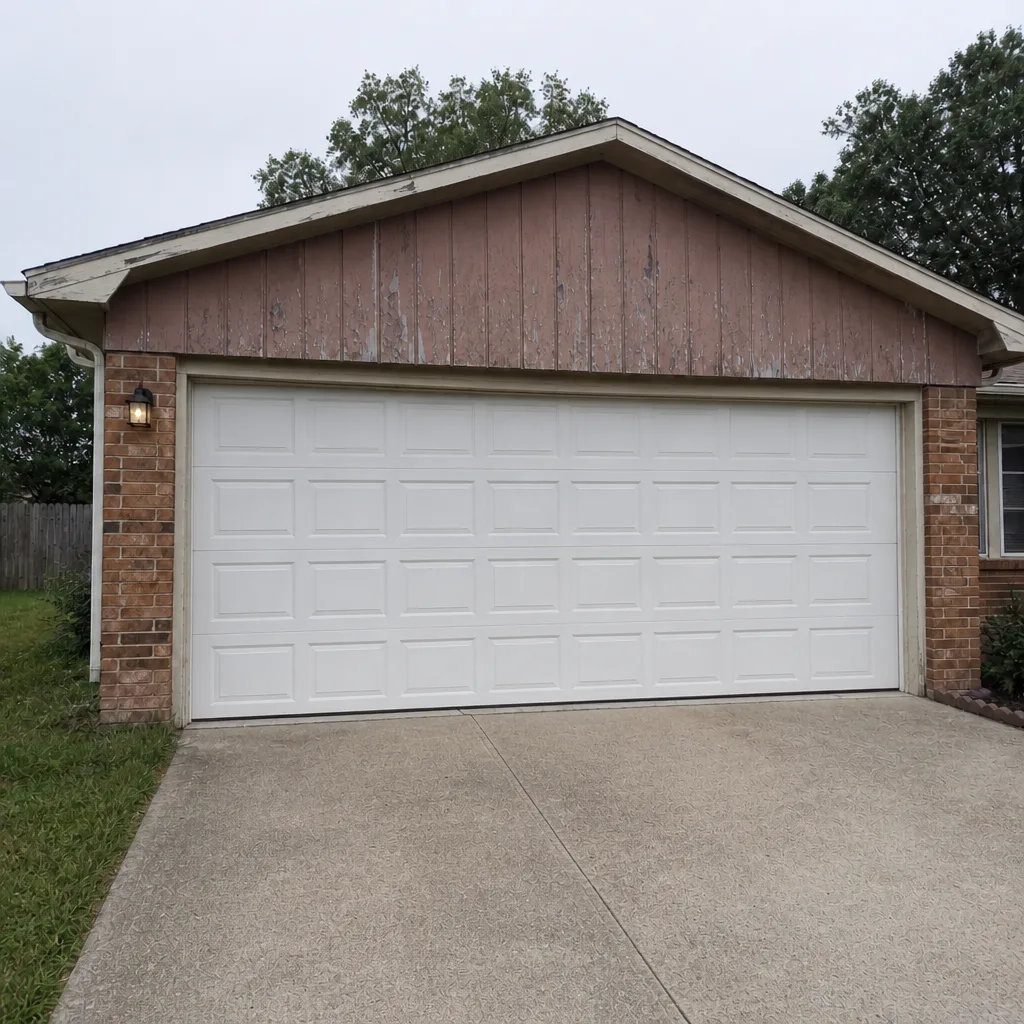
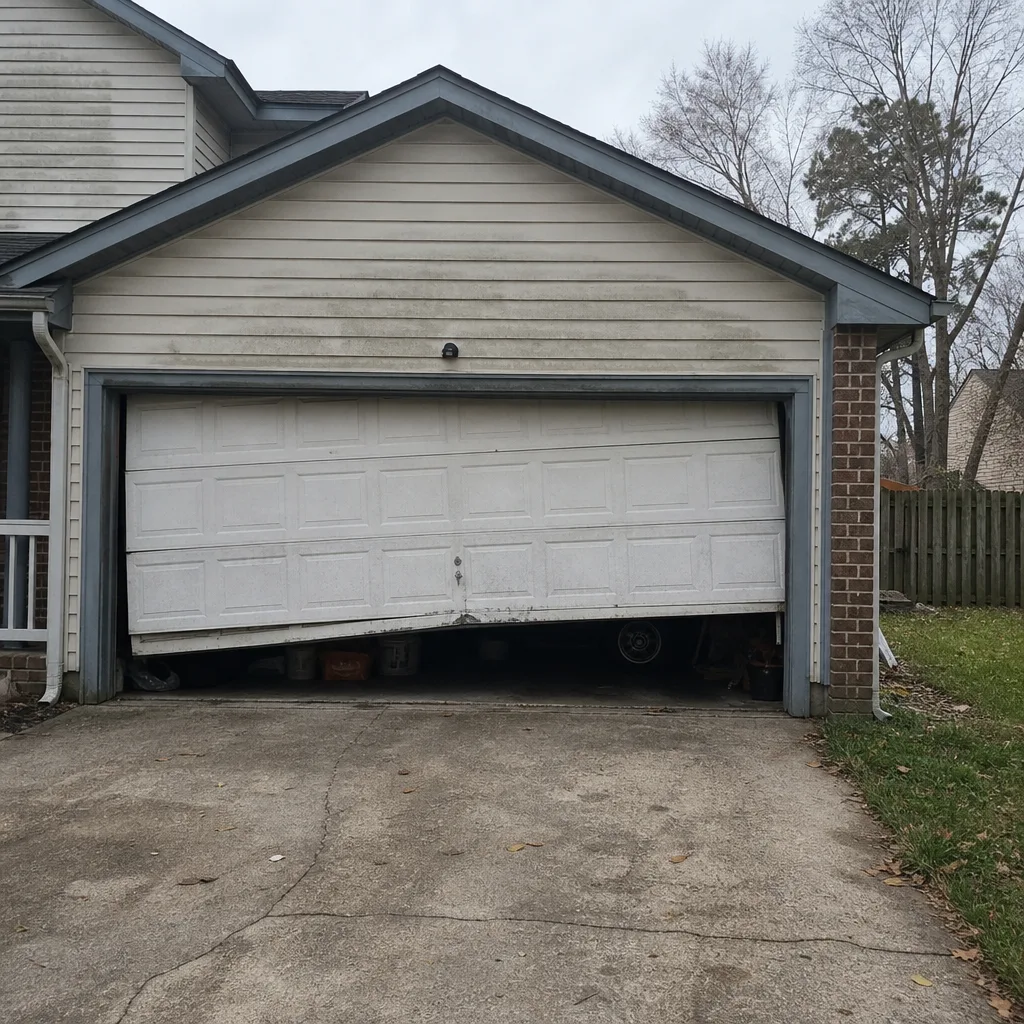
See the difference
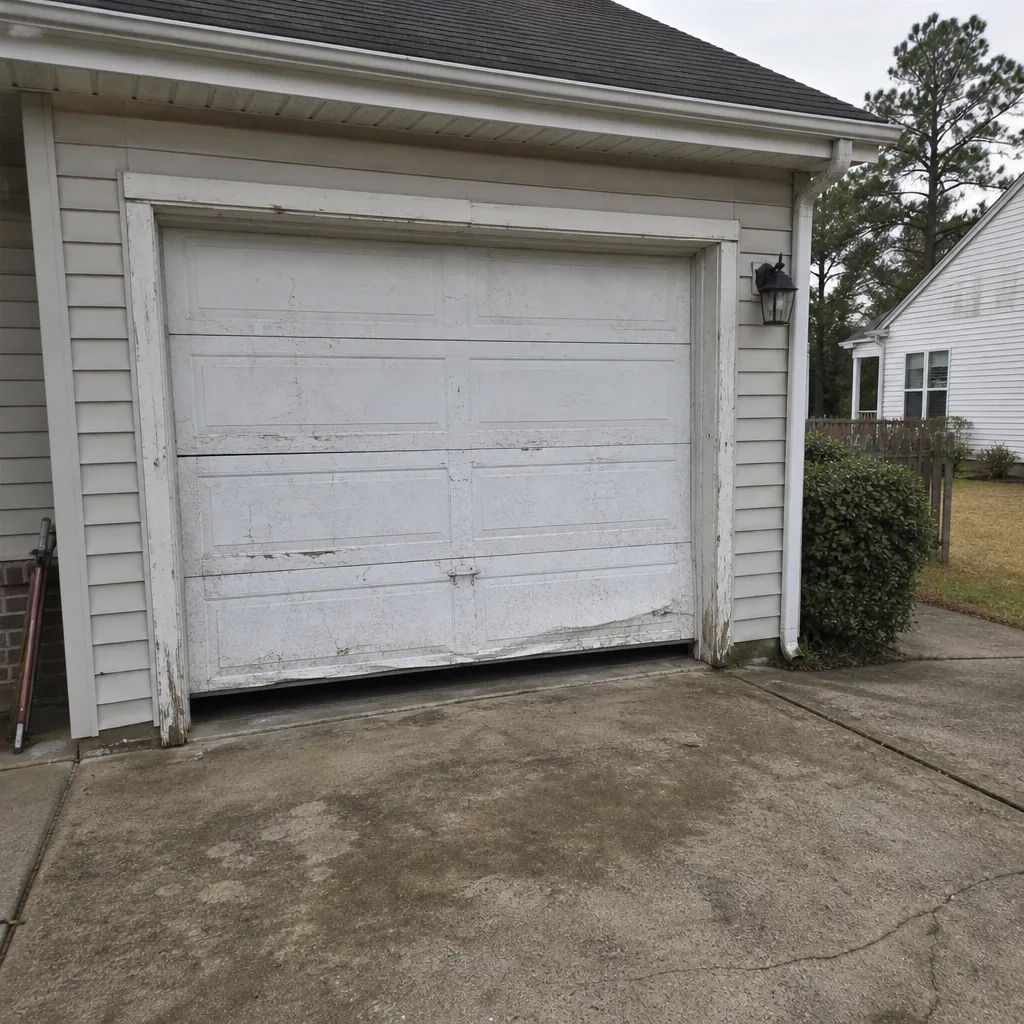 Before
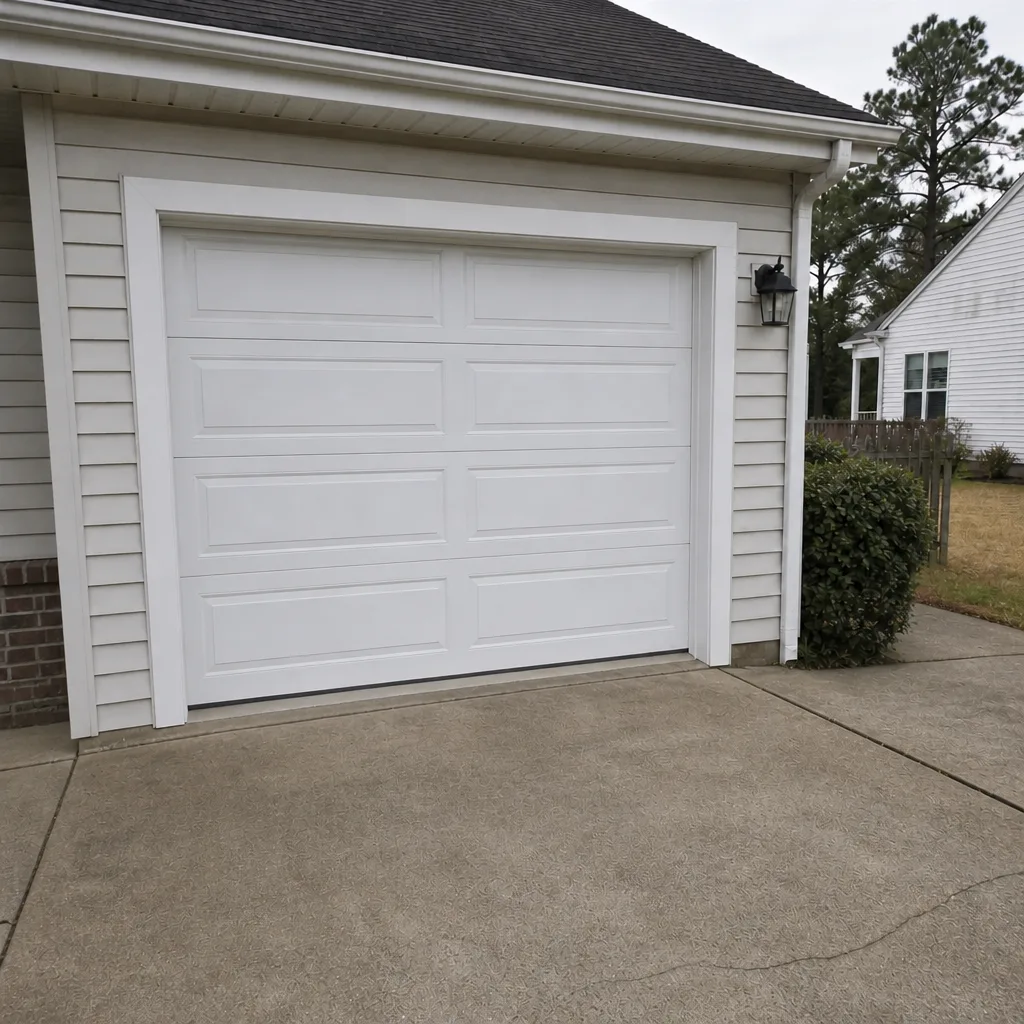 After
 Before
 After
 Before
 After
When to Call a Professional
Some garage door work belongs in the hands of a trained technician. Cracked or broken springs, snapped cables, and doors that come off their tracks all involve stored mechanical energy that can cause serious injury if handled without the right tools and training. A wind-rated door that needs re-tensioning or track adjustment should be serviced by someone who installs those doors to spec, because an improper adjustment can take the rating out of the assembly. If you’re choosing a brand and you want a hands-on opinion before you buy, our technicians have up to 15 years of experience across the major door brands and can inspect your existing door, tell you what to look for in a replacement, and confirm the opener pairing. Highpoint Garage Door Service offers free estimates in Chesapeake – call (877) 309-4107. If the issue is a sudden failure, we’ll get a technician out to you. Our technicians repair springs, cables, tracks, and openers for brands including LiftMaster, Chamberlain, Genie, and Clopay, and we can also walk you through your options for a full replacement through our Highpoint Garage Door Service work.
Frequently Asked Questions
There’s no single best brand for every Chesapeake home. The right choice is the model whose steel coating, wind-load rating, insulation, and warranty terms fit your specific exposure and your garage use – and whose parts a local technician can get. Compare those four specs across brands you’re considering, then pick the one that meets all of them, not the one with the biggest logo. Call (877) 309-4107 for an exact, no-cost estimate.
Galvalume is a zinc-aluminum coating that resists moisture and heat more effectively than plain galvanized steel, and it does matter in Chesapeake’s humid climate. A Galvalume-coated door holds its finish longer and resists surface corrosion better than a lightly galvanized one, especially on doors facing afternoon sun. Ask your installer which coating the specific door you’re buying carries. Call (877) 309-4107 for an exact quote.
Whether you need a wind-rated door depends on your site’s wind exposure category, which depends on location and surrounding terrain. In Chesapeake, a building official or the manufacturer’s specification sheet can tell you what design pressure your location calls for. If a rated door is required, confirm the installation includes the reinforcement the manufacturer specifies, or the rating won’t hold. Call (877) 309-4107 to talk through your home’s needs.
A higher total R-value is better, but a higher center-of-panel R-value isn’t necessarily. When comparing, ask whether the number is total assembly or panel-center, and only compare like for like. For an attached garage in Chesapeake, insulation reduces summer heat gain into the house, so total R-value matters. Call (877) 309-4107 for an exact quote on an insulated option.
Lifetime coverage usually covers springs and sometimes structural components, and it almost always excludes surface rust, finish fading, and damage. Compare the exclusions across brands, not just the headline term, and confirm the door you buy is installed to the manufacturer’s spec. Call (877) 309-4107 for help reviewing a warranty before you buy.
Yes. Our technicians work on LiftMaster, Chamberlain, Genie, Clopay, Amarr, Wayne Dalton, Craftsman, and Raynor products, and we service the door and opener regardless of where you bought it. Call (877) 309-4107. We answer 24/7. Fast dispatch from 7am to 7pm, Sunday through Friday.
The Bottom Line
Choosing a garage door brand in Chesapeake comes down to specifications and support, not reputation. Check the steel coating for corrosion resistance, verify the wind-load rating and that the install will match it, ask which R-value number you’re being quoted, and read the warranty exclusions before you sign. Then confirm that parts for the model are easy to source locally. The best brand for your home is the one whose door meets your real exposure and whose network keeps it working. Compare before you buy, then get the install right the first time. Pick the door that fits your house and you’ll spend less time thinking about it for the next decade.
If you’re ready to compare doors or want a second opinion on a bid, reach out to our team at Chesapeake. We’re a garage door specialist, not a general handyman, and we’ll walk through your options without steering you toward a single brand. Call (877) 309-4107 for a free estimate. We answer 24/7. Fast dispatch from 7am to 7pm, Sunday through Friday.
Written by the team at Highpoint Garage Door Service.